


Implant
What is a Dental Implant?
Dental implants are an effective way to replace missing teeth. They are designed to blend in with your other teeth and are an excellent long-term option for restoring your smile.
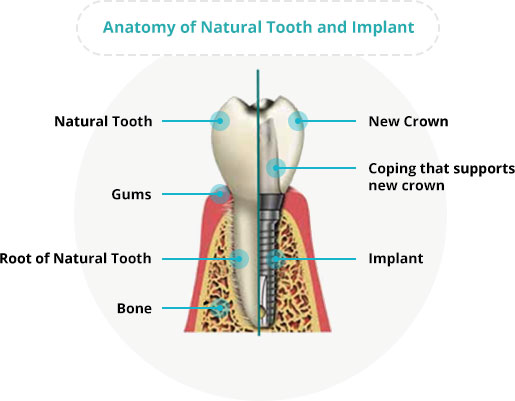
A dental implant is a small titanium screw that is surgically placed into the jawbone. It replaces the root of the missing tooth and serves as a support for your new tooth (crown) or teeth (a row of crowns, also known collectively as a bridge).
Dental implants can also be used as an attachment or support for full dentures in cases where all teeth are missing.
This is possible due to the biocompatible properties of titanium. A strong bond is formed between the implant and the bone over several weeks or months (osseointegration), firmly anchoring it to the jaw.
Why do I need Dental Implants?
Natural Look & Function
With dental implants, you will get to enjoy a set of artificial teeth that most closely resemble natural teeth in terms of aesthetics and function (speech and chewing). There is also no need to trim neighbouring teeth when you choose dental implants to replace your missing teeth.
Maintain Facial Structure
Your dentist will carry out a detailed assessment with the aid of study models and x-rays to determine if it is feasible for dental implants to be placed. There must be adequate bone to surround an implant. Should there be a deficiency due to previous bone loss, the dentist will discuss with you the different methods of bone augmentation.
Smile Naturally
The colour, shape and contour of the replacement tooth supported by the implant can be made to match your other teeth.
Eat and Speak Normally
Missing teeth can negatively affect how you eat and speak. With replacement teeth supported by implants, you will be able to eat and speak normally again.
Fit Comfortably
Dental implants are usually more stable, comfortable and longer-lasting than other restorations (such as dentures) because they are fixed to your jawbone. Also, dental implants are made of biocompatible materials which are proven to be durable.

Your Trusted Partner in Dental Excellence.
Your journey to a dream smile starts here. Experience personalized, comfortable care from the moment you walk through our doors, tailored specifically to your unique needs.
Treatment Procedures
Pre-Treatment Evaluation & Treatment Planning
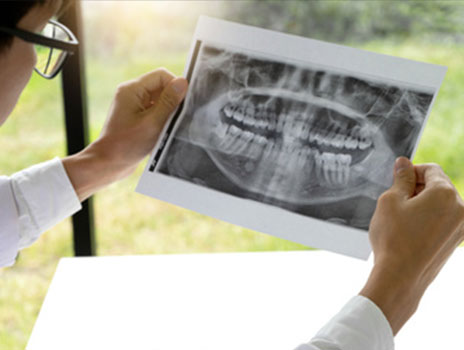
Your dentist will carry out a detailed assessment with the aid of study models and x-rays to determine if it is feasible for dental implants to be placed. There must be adequate bone to surround an implant. Should there be a deficiency due to previous bone loss, the dentist will discuss with you the different methods of bone augmentation.
Implant Placement
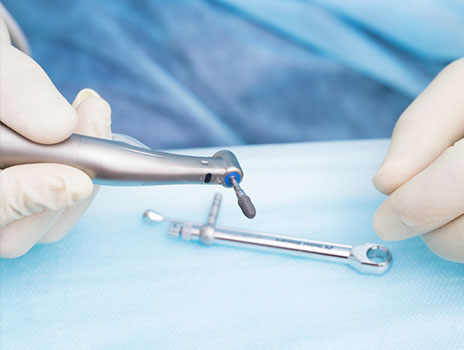
This treatment involves making a small incision in the gums to expose the underlying jawbone so the dentist can prepare the chosen site for implant placement. During this process, you will feel some vibration, similar to having a tooth filled.
This procedure is carried out under local anaesthesia. However, if you require sedation, please discuss this with your dentist.
The bone around the implant heals in a process called osseointegration. The implant is considered stable when the bone grows around it and holds it in place. This healing process usually takes a few weeks to a few months, depending on your oral and overall health conditions.
Placement of Implant-Supported Crown, Bridge or Denture
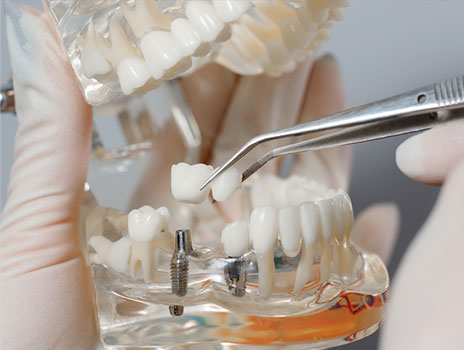
By this time, the implant would have integrated with your bone and the dentist will proceed with the fabrication of replacement teeth. An abutment connects the new tooth or teeth to the implant.
- For a single tooth implant, the dentist will customise a new crown.
- For multiple missing teeth, custom-made bridges or implant-supported dentures will be created.
This process may take a few visits. You should be able to function immediately after these replacement teeth have been fixed in your mouth.
FAQs
How do I know if dental implants are suitable for me?
You will be advised accordingly during your consultation. The dentist will carry out thorough clinical and x-ray examinations.
What precautions should I take before the surgery?
If you are a smoker, you should stop smoking for at least two weeks before the surgery. Studies have shown that smoking significantly decreases the success rate of implant placement.
Is dental implant treatment painful?
There will be some discomfort after implant placement, similar to the extraction of a tooth. It is normal to experience some bruising and swelling as well. Your dentist will prescribe painkillers and anti-swelling medications.
You will be advised to adhere to a soft diet after surgery. You should continue brushing your teeth but avoid the surgical area for the first two weeks.
When can I resume normal activities?
Most people return to work within a day or two after the surgery. If you are an existing denture wearer, your denture may need to be adjusted for better fit during this period. Please consult your dentist for further advice.
What is the success rate for dental implants?
Dental implants have been used for over 40 years. The long-term success rate is reported to be as high as 95%. However, smoking and certain medical conditions (e.g., diabetes) can compromise wound healing and increase the risk of implant failure.
How long do dental implants last?
Implants can fail if proper oral hygiene is not maintained. It is important to visit your dentist at least twice a year to assess your oral hygiene and implant stability. Proper brushing, flossing and regular dental check-ups help ensure long-term success.
How do I look after my teeth after dental implant treatment?
After inserting dental implants, you need to look after your teeth carefully. Good oral hygiene habits help ensure satisfactory results.
- Like normal teeth, proper brushing and flossing are essential.
- Periodic reviews and check-ups by your dentist will help your dental implants last longer.